




One clear December Morning in 2000 I was flying at 500 AGL south of JFK over the ocean when I encountered a flock of seagulls. When I turned on my landing lights, which I’m told is to help the birds see the plane, all but one missed me. Apparently, no one told him why my landing lights were on.
A big, brown and white garbage seagull came over the passenger wing and slammed into the right stabilator. I’m not
sure of his airspeed, but I was doing between 155 and 160 knots.
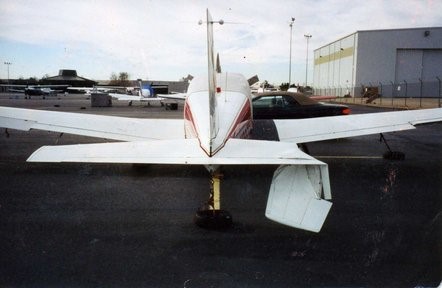
The impact, coupled with the airspeed, took out the outer half of the right stabilator. The impact was so intense that the left stabilator and trim tabs were also bent, and I later learned that three of the four stringers holding the tail on were torn off. The remaining stringer had only half of the rivets remaining.
The aircraft immediately went vertical
By pushing forward with all my strength, I was able to regain control of the aircraft and then began to use my skill, knowledge, experience and luck to slowly reduce power so I could maintain control. It wasn’t easy and required constant forward pressure.
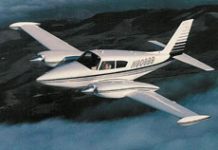
I was now the test pilot for my 1966 Piper Comanche. I began to ascertain the damage to find out what I had left.
“By pushing forward with all my strength, I was able to regain control of the aircraft”
I slowly tried the roll input and yaw; both were as they should be. Obviously, I knew I had elevator to go up, but not down. The engine was still producing power so I decided not to declare an emergency. I informed ATC of the predicament, refused to land on the beach or at JFK and continued flight for another 20 minutes to Republic Airport in Farmingdale, N.Y. (FRG).
Keeping in mind that from the pilot seat there was unknown damage to the tail, gear was left up as were flaps, until over the threshold at which time gear was extended and flaps left retracted. I didn’t know how close to the stall I was operating, nor landing, so all inputs were slow and pre-determined.
The decision to wait until I got to the runway before making any changes to configuration of the aircraft was simple. I’d rather crash at a lower altitude on the airport where the help was, than miss it and have to wait for help. Landing was uneventful, except for the emergency trucks the tower had called out on their own, and the tower telling me I was missing the last three feet of the stabilator.
I taxied to my tie down spot and got out to see just how extensive the damage was. That was the first time I actually
saw it. I think that’s when I got a little rush.
I filled out a bird strike report and went home. What was I going to tell my wife? I figured I wouldn’t tell her and maybe she wouldn’t notice the damage or we weren’t going flying for a few months. I thought better of that idea. Her reaction was pretty calm which led me to believe that she didn’t love me that much. I was wrong about that too as later that afternoon I borrowed my friend’s Comanche to fly to Connecticut and she thought I was crazy.
When I returned later, I found the friendly FAA had put a condition notice on the airplane telling me I shouldn’t fly the airplane in its condition. (What would we do without this valuable input? Like I would fly it in its current condition.)
The FAA also wanted to see the aircraft logs regarding the maintenance prior to the accident.
I have saved the tapes of the communication from New York approach and FRG. As I said, some people, my wife for one, thought I was crazy for flying again, let alone the same day. “How can you go flying again after that?” I figured, what were the odds of it happening twice in the same day?
The photos show the extensive damage and the strength of our airplane. Even sick and limping, it got me home. I have been flying my Comanche since 1978. I have accumulated almost 5,000 hours and approximately 4,000 are in the Comanche. There still is no better airplane flying, nor more fun to fly.
Editor’s note: I would not intuitively know what do in similar circumstances. But, having survived a fuel outage on takeoff which destroyed our original plane, I believe it is so important to learn from others experiences. Erik Sacks will be speaking at one of our fly-in’s